
How Much Does Flat Tire Repair Cost in Pittsburgh?
Flat tire repair in Pittsburgh runs $20-50 for a patch with TPMS reset included. Here's when a patch beats replacement, and when repair isn't safe at all.
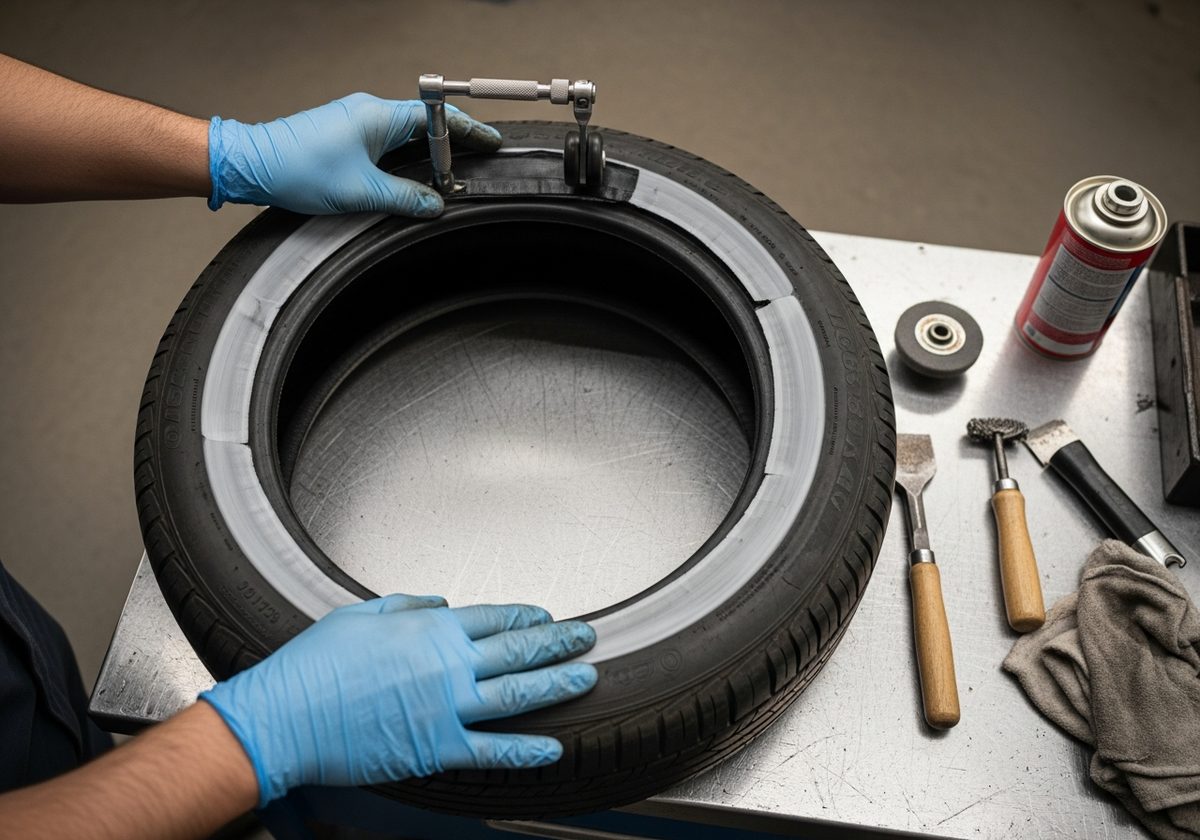
A standard flat tire repair in Pittsburgh runs $20 to $50 for a tread puncture — combination patch-plug and TPMS reset included — and most repairs take 30 to 45 minutes. That's the cheap outcome. The expensive outcome is a tire that isn't safely repairable, which means a replacement instead: anywhere from roughly $100 to $400-plus per tire depending on size and brand. The gap between those two numbers is exactly why the honest answer to how much flat tire repair costs has to start with whether your tire can be repaired at all, not just what the labor runs.
What a repairable flat actually costs
A proper repair is a combination patch-plug installed from the inside of the tire after it's dismounted from the rim — not the rope plug jammed in from the outside at a gas station, which is a temporary fix at best and not something we'd stand behind on a Pittsburgh hill in January. That inside-out repair, done right, is one of the cheapest line items in the shop: usually $20 to $50 including a TPMS sensor reset, and most repairs are finished in 30 to 45 minutes. Walk-ins are welcome for this one — you don't need to book ahead for a tread puncture. Full details are on our flat tire repair page.
What replacement costs if the tire isn't repairable
If the damage is on the sidewall, the puncture is too big, or the tire's been driven on flat, repair isn't an option and you're pricing a new tire instead. That's a bigger range: budget tires start around $100-150 each, mid-range brands like Goodyear or Bridgestone run higher, and premium tires from Michelin can run $250-plus per tire depending on size. Our new tire cost guide has the full budget-to-premium breakdown for a set of four, and if the rest of your tires still have good tread, a single used tire matched to your existing set is often the more sensible replacement than four new ones — see our used vs. new tires comparison for when that math works.
Quick reference: when a patch is enough vs. when you need a new tire
- Small nail or screw in the tread, no sidewall involvement: patch — cheap, done the same visit.
- Puncture larger than about 1/4 inch, even in the tread: usually replacement.
- Any damage on the sidewall, including a small cut or a bubble: always replacement, regardless of size.
- Tire was driven on while flat for more than a few hundred feet: replacement, even if the visible damage looks minor.
- Tire already has one prior repair on it: we'll measure carefully — a second repair often isn't advisable.
The variable that actually decides the price: is it repairable at all
Everything above hinges on one call: is the puncture in a spot and of a size that's safe to repair. Per NHTSA and tire-industry repair guidelines, a puncture has to sit in the tread (not the shoulder or sidewall), measure about 1/4 inch or smaller, and the tire can't have been driven any real distance while flat, since that can cause internal liner damage you can't see from outside. We walk through the full decision tree — sidewall versus tread, the driven-on-flat rule, and where the size cutoff actually is — in our tire repairability guide. If you want the short version: bring it in, and we'll show you the puncture location on the tire before quoting either option.
Patch vs. plug: does the repair method change the price?
Not by much at our shop, because we don't offer a plug-only repair — every puncture we fix gets the combination patch-plug from the inside, which is the only method tire-industry standards actually endorse as a permanent repair. A plug-only fix from the outside is cheaper at a gas station because it skips dismounting the tire, but it doesn't seal the inner liner, which means a slower, harder-to-detect leak later and a real risk of the plug working loose at highway speed. If you want the deeper comparison, our plug vs. patch guide covers the safety and reliability tradeoff in full, including what NHTSA guidance says about it.
TPMS reset: why it's part of the price, not an add-on
Most vehicles built since the mid-2000s have tire pressure monitoring sensors mounted inside each wheel, and dismounting a tire to repair it means the sensor gets disturbed. We reset and relearn the system as part of every repair so your dashboard warning light clears and stays clear — it's built into the $20-50 range above, not billed separately. If your TPMS light came on before you even knew about a flat, that's often your first sign something needs attention, so don't ignore it waiting for a slow leak to become a flat tire on the Parkway.
What makes a repair harder — and sometimes pricier
A few things push a repair toward the higher end of that $20-50 range, or push us toward recommending replacement instead: run-flat tires, which have reinforced sidewalls that make internal inspection trickier and which most manufacturers recommend replacing rather than repairing after real flat-driving; larger truck and SUV tires, where a bigger contact patch and thicker construction takes more shop time; and a tire that already has an existing repair nearby, which limits where a second one can safely go. None of these are hard rules against repair — they're just reasons we inspect before we quote instead of pricing over the phone.
Is it worth fixing a spare-only flat, or should you just drive on the spare?
Compact spares, the small 'donut' tires most cars carry, aren't rated for regular driving — most are speed-limited to around 50 mph and mileage-limited to a few hundred miles by the manufacturer. Getting the actual flat repaired or replaced quickly isn't just about convenience; driving for days on a compact spare puts uneven wear on it and changes how the car handles, especially with a mismatched tire size at one corner on Pittsburgh's hills. If your car doesn't have a spare at all, and more new vehicles don't, that repair or replacement isn't optional — it's the only way you're driving again.
Does insurance or roadside assistance cover flat repair?
Comprehensive auto insurance can cover tire damage in some cases, but with a repair this cheap, filing a claim rarely makes sense once you factor in a deductible — most drivers just pay out of pocket. Roadside assistance through AAA or your insurer's own program is more useful for the moment of the flat itself: getting a spare on or a tow to us. It typically doesn't cover the repair or replacement cost itself, just the roadside labor to get you here safely.
Why most Pittsburgh flats end up on the cheap side of this
PublicSource's analysis of 311 data shows the city patches more than 30,000 potholes a year, and while a hard pothole hit can cause sidewall damage that isn't repairable, the more common Pittsburgh flat is a nail or screw picked up in a parking lot or on a construction-heavy street — a straightforward tread puncture that lands squarely in repairable territory. Add in Pittsburgh's construction season each spring and summer, when torn-up streets scatter loose debris and stray fasteners, and tread punctures stay the most common flat we see year-round, not just after a bad pothole winter. Our pothole tire damage guide breaks down which pothole-caused failures are patchable and which aren't, if that's what you're dealing with specifically.
The one thing that turns a cheap repair into an expensive one
Driving on a flat tire, even a short distance, is the single most common way a $30 repair turns into a $150-plus replacement. The sidewall folds and can tear internally within a few hundred feet at any real speed, and that damage doesn't show up as a visible flaw you'd catch before mounting it back on the road. If you go flat, the safest and cheapest move is to stop, put the spare on or call for a tow, and let us look at it before you drive on it any further than you have to.
Same-day vs. walk-in: what to expect timing-wise
Walk-ins are welcome for flat repair specifically, and most Pittsburgh flats we see are simple enough that you're in and out inside the hour, tread puncture, TPMS reset, and all. Where timing stretches is when the tire turns out to be unrepairable and you need a specific size or brand we don't have on the shelf — we'll tell you honestly on the phone or the moment we see the damage whether that's a same-day fix or a next-day order, rather than letting you find out after waiting.
How we quote it
We inspect the tire, photograph the actual puncture or damage, and text you the picture along with both numbers — repair and replace — before touching anything. No guessing over the phone, no surprise upcharge once the tire's already off the car. Call (724) 679-7829 or stop by 400 Railroad Street, Bldg 1 Garage 4. We're open 7 AM to 9 PM, seven days a week, and walk-ins are welcome for flat repair.
FAQ
- How much does it cost to patch a flat tire in Pittsburgh?
- A standard tread puncture repair runs $20 to $50, including a TPMS sensor reset, and most repairs take 30 to 45 minutes. Walk-ins are welcome — you don't need an appointment for a flat repair.
- Is it cheaper to repair or replace a flat tire?
- Repair almost always wins on price when it's an option — $20 to $50 versus $100 to $400-plus for a replacement tire. The catch is that not every flat qualifies for repair; sidewall damage, oversized punctures, and tires driven on while flat all require replacement regardless of cost.
- Does flat tire repair include a TPMS reset?
- Yes, at our shop it's built into the price, not billed separately. Repairing a puncture means dismounting the tire, which disturbs the pressure sensor, so we reset and relearn the system before you leave so your dashboard warning light clears.
- How long does a flat tire repair take?
- Most tread-puncture repairs take 30 to 45 minutes including the TPMS reset. If the tire turns out to be unrepairable and needs replacement, add mounting and balancing time, but most customers are still back on the road within the hour.
- Why did a shop tell me my flat isn't repairable?
- Usually one of three reasons: the damage is on the sidewall rather than the tread, the puncture is larger than about 1/4 inch, or the tire was driven on for some distance while flat, which can cause hidden internal damage. Our [tire repairability guide](/blog/how-to-know-if-a-tire-is-repairable) walks through exactly how that call gets made.
- Does insurance cover flat tire repair?
- Technically sometimes, through comprehensive coverage, but a repair this cheap rarely clears a deductible in a way that makes filing worthwhile. Roadside assistance programs like AAA are more useful for getting you and the car here safely than for covering the repair cost itself.
- Can I drive on a compact spare until I get the flat fixed?
- For a short trip, yes, but compact spares are speed- and mileage-limited by the manufacturer, typically around 50 mph and a few hundred miles. Get the actual tire repaired or replaced as soon as you reasonably can rather than treating the spare as a long-term fix.
Bring it to us. We'll tell you straight.
Photo-first quotes. Real prices. Open 7 days, 7am–9pm.