
How Long Do Used Tires Last? The Real Math
Roughly 2,000-3,000 miles per 32nd of remaining tread — but Pittsburgh's salt-belt winters and hills shorten that. The real math and when a used tire stops being worth it.
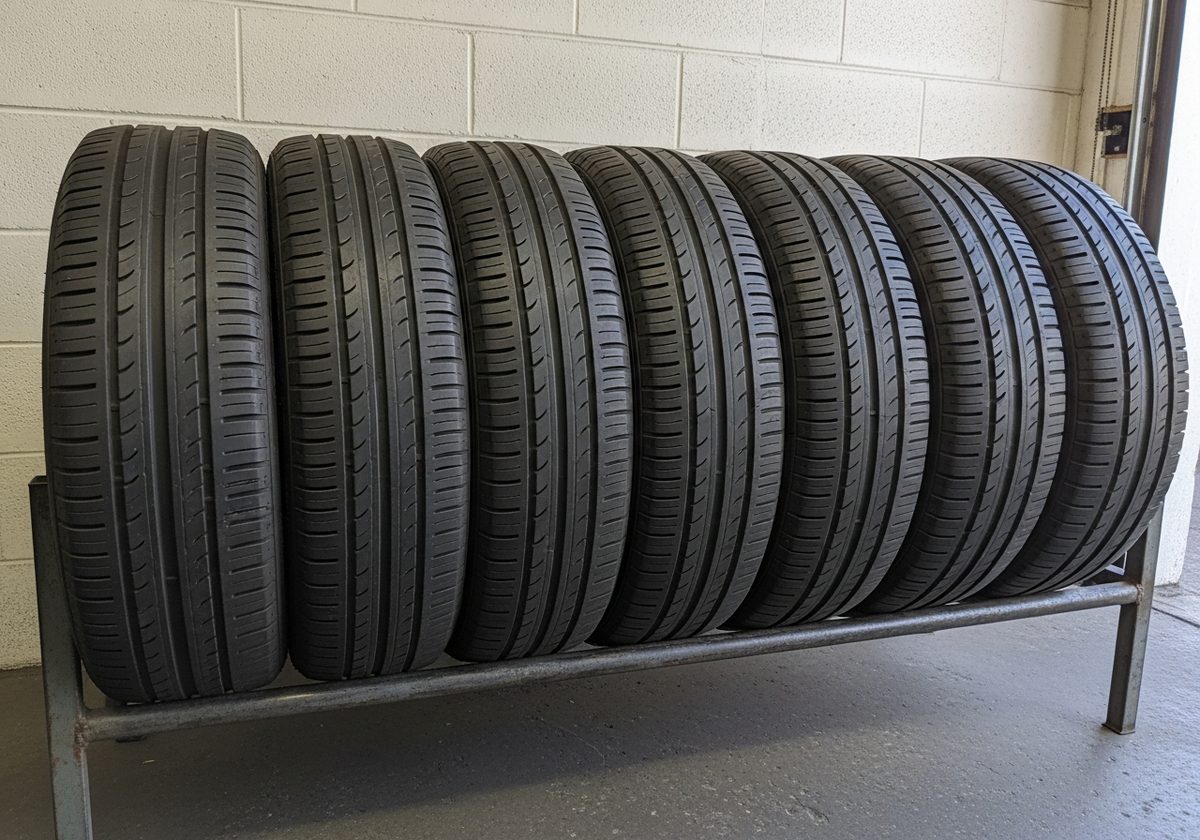
A used tire with healthy tread left has roughly 2,000 to 3,000 miles of life in it per 32nd of an inch of remaining depth, depending on how and where you drive. A tire at 6/32" — a third worn — has somewhere between 12,000 and 18,000 miles ahead of it under average conditions. That range is wide on purpose, because the variables that move it — driving style, vehicle weight, alignment condition, and Pittsburgh's specific roads and winters — can swing the real number substantially in either direction. Here's the actual math, a worked example, and why we tell Pittsburgh customers to plan toward the lower end of that range rather than the higher one.
The base math: miles per 32nd of tread
A new passenger tire typically starts around 10-11/32" of tread and is considered worn out around 2/32", Pennsylvania's legal inspection minimum — so a new tire's full life covers roughly 8 to 9/32" of wear. Divide a typical 45,000-to-60,000-mile tread-life warranty by that range and you land close to the 2,000-to-3,000-mile-per-32nd figure we use for used tires. It's not an exact science — tread wears faster in the first few thousand miles and slower once a tire breaks in — but it's a reliable enough estimate to compare options against each other.
Worked example: what a 6/32" used tire actually gets you
Take a used tire measuring 6/32" against our 4/32" minimum floor — meaning it has 2/32" of usable tread above where we'd even consider selling it as a match, or 4/32" above Pennsylvania's hard 2/32" inspection cutoff depending on which line you're measuring to. At 2,000 to 3,000 miles per 32nd, that's 8,000 to 12,000 miles of driving before it reaches our 4/32" comfort floor, or 12,000 to 18,000 miles before it hits the legal 2/32" minimum. For a driver putting 12,000 miles a year on a car, that's anywhere from most of a year to about a year and a half, depending on driving conditions.
Why Pittsburgh drivers should plan for the low end of that range
Three local factors push actual mileage toward the bottom of the 2,000-to-3,000 range rather than the top. PublicSource's analysis of 311 data shows the city patches more than 30,000 potholes a year, and every hard hit is a chance to knock a wheel out of alignment, which accelerates uneven wear on whatever tire is mounted there. Pittsburgh's hills mean more braking and cornering load per mile than flat-city driving, which wears tread faster than steady highway cruising. And stop-and-go city driving in general simply puts more wear cycles into the same number of miles than a longer, steadier commute would. None of that makes a used tire a bad choice — it just means budgeting toward the conservative end of the estimate.
Tread depth isn't the only variable
Two tires at the same 6/32" starting point can have very different remaining lives depending on factors that have nothing to do with the tread number itself. A car with a slightly out-of-spec alignment eats tread faster on one edge than the center, shortening real-world life well below the mileage-per-32nd estimate even though the average depth looks fine. Underinflation and overinflation both accelerate wear in different patterns. And a heavier vehicle, a full-size SUV or a truck carrying a load, puts more force through the same contact patch than a compact sedan, wearing tread faster per mile. Our tire wear patterns guide covers how to read what your current wear pattern is telling you.
How salt-belt winters specifically shorten tire life
Beyond the physical wear from hills and potholes, Pittsburgh's roughly five-month salting season adds its own drag on tire life. Heavy hub and rim corrosion can break the bead seal and create slow leaks that look like tire failure but aren't about tread at all. And tires that sit through repeated freeze-thaw cycles with brine splashed into the sidewall can see accelerated dry-rot cracking over several seasons, a separate clock from tread wear that can end a tire's useful life early even with plenty of depth left. Our salt-belt tire wear guide covers what winter salt actually does to tires, wheels, and brakes in more detail.
Tread wear rate on the front axle vs. the rear
Front tires on most vehicles carry the engine's weight and handle steering and braking forces, so they typically wear faster than rear tires on the same car, sometimes noticeably so on front-wheel-drive vehicles. If you're buying two used tires rather than four, that's worth factoring in: putting the tires with more remaining tread on the front of a front-wheel-drive car, or the rear on some performance and rear-wheel-drive layouts, can extend how long the full set lasts before the next tire conversation.
When a used tire's remaining life isn't worth the price
The math breaks down in favor of new tires once a used tire's price-per-remaining-mile gets close to what you'd pay for a budget new tire's price-per-total-mile. A used tire at 4/32" priced only slightly below a budget new tire isn't a good trade, since the new tire gives you two to three times the remaining tread for a small premium. Used tires make the clearest financial sense when they're priced well under half of a comparable new tire, which is the range we aim for. For context, our new tire cost guide shows Pittsburgh drivers realistically getting 30,000 to 40,000 miles from budget tires and 45,000 to 60,000 from mid-range on a fresh set, so a used tire's remaining-mile value should be judged against those full-life numbers, not just the sticker price. Our used vs. new comparison walks through the full cost-per-mile breakdown.
How to estimate remaining life before you buy
Ask for the exact tread depth in 32nds, not a vague 'good tread' description — 'good' can mean anything from 8/32" to 4/32" depending on who's talking. Multiply the difference between that number and your comfort floor (we use 4/32", Pennsylvania's legal floor is 2/32") by 2,000 to 3,000 miles, and you've got a real estimate to compare against the price. If a seller won't give you an exact number, that's worth treating as a red flag on its own.
What shortens a used tire's remaining life beyond normal wear
A tire with even tread and no other issues wears roughly on schedule. Three things throw that off: uneven wear from a pre-existing alignment problem, which eats one edge faster than the mileage estimate accounts for; age-related dry rot, which can crack a tire's rubber regardless of remaining tread depth, especially past the 6-to-10-year mark most manufacturers point to; and a prior repair, which we simply won't sell on a used tire in the first place, but which shortens life on any tire that has one, used or not.
One used tire or a matched pair?
If you're replacing a single tire, matching remaining tread depth to your other three matters more than matching brand exactly — a close tread-depth match keeps rolling diameters even, which protects the drivetrain on all-wheel-drive vehicles especially. If you're replacing a pair, put the deeper-tread pair on the rear for most front-wheel-drive vehicles, since that axle handles rear-end stability during hard braking and in wet conditions. We'll check your existing tires' depth and recommend the placement that gets you the most safe, even life out of the full set.
Getting the most out of a used tire's remaining life
Rotation every 5,000 to 7,500 miles evens out the natural wear difference between front and rear positions, which matters even more on a used tire that's starting with less tread margin than a new one. A wheel alignment check, especially after a pothole hit or if you notice uneven wear developing, protects whatever life is left rather than accelerating its loss. And checking pressure monthly, since Pittsburgh's temperature swings move tire pressure roughly 1 PSI per 10°F, keeps the tire wearing evenly across its face instead of concentrated on the center or edges. Our wheel alignment cost guide has current pricing if you're due for a check.
Tell us your size and how long you plan to keep the car, and we'll help you figure out whether a used tire's remaining life is worth the price for your specific situation. Call (724) 679-7829 or stop by 400 Railroad Street, Bldg 1 Garage 4 — open 7 AM to 9 PM, seven days a week.
FAQ
- How many miles does a used tire with 6/32 tread last?
- Roughly 12,000 to 18,000 miles under average conditions, using the 2,000-to-3,000-mile-per-32nd estimate. Pittsburgh's hills, potholes, and salt-belt winters tend to push that toward the lower end of the range.
- Does Pittsburgh's weather shorten tire life?
- Yes, in a few specific ways. Winter salt corrodes wheel hubs and rim seals, which can create leaks unrelated to tread wear, and repeated freeze-thaw cycles with brine on the sidewall can accelerate dry-rot cracking over several seasons, separate from normal tread wear.
- How do I calculate how long a used tire will last?
- Subtract your comfort floor (we use 4/32-inch; PA's legal minimum is 2/32-inch) from the tire's current tread depth in 32nds, then multiply by 2,000 to 3,000 miles. A tire at 6/32-inch against a 4/32-inch floor gives you roughly 4,000 to 6,000 miles of comfortable use.
- Is a used tire with 4/32 tread worth buying?
- It depends on the price relative to a new tire. At 4/32-inch, our own minimum floor, it's worth buying if it's priced well under half of a comparable new tire. Closer to that price, a new tire's much longer remaining life is usually the better value.
- Does rotation extend a used tire's remaining life?
- Yes. Rotating every 5,000 to 7,500 miles evens out the front-to-rear wear difference, which matters more on a used tire that started with less tread margin than a new one. It can't fix wear caused by misalignment, though — that needs a separate alignment check.
- What's the difference in lifespan between used and new tires?
- A new tire gives you the tire's full rated tread life, typically 30,000 to 75,000-plus miles depending on tier. A used tire gives you whatever portion of that life remains at the depth it's sold, which is why checking the exact tread depth in 32nds matters so much when comparing price to value.
- How do I know when a used tire isn't worth keeping anymore?
- Once tread approaches Pennsylvania's 2/32-inch inspection minimum, uneven wear develops, or the tire shows sidewall cracking regardless of remaining depth, it's time to replace rather than keep driving on it. Our [tread depth guide](/blog/how-to-check-tire-tread-depth) covers how to check it yourself with a penny or quarter.
Bring it to us. We'll tell you straight.
Photo-first quotes. Real prices. Open 7 days, 7am–9pm.