
How to Know If a Tire Is Repairable (Before You Pay for Either Fix)
The decision framework tire shops actually use: sidewall vs. tread, the driven-on-flat rule, the size cutoff, and how many repairs a single tire can safely carry.
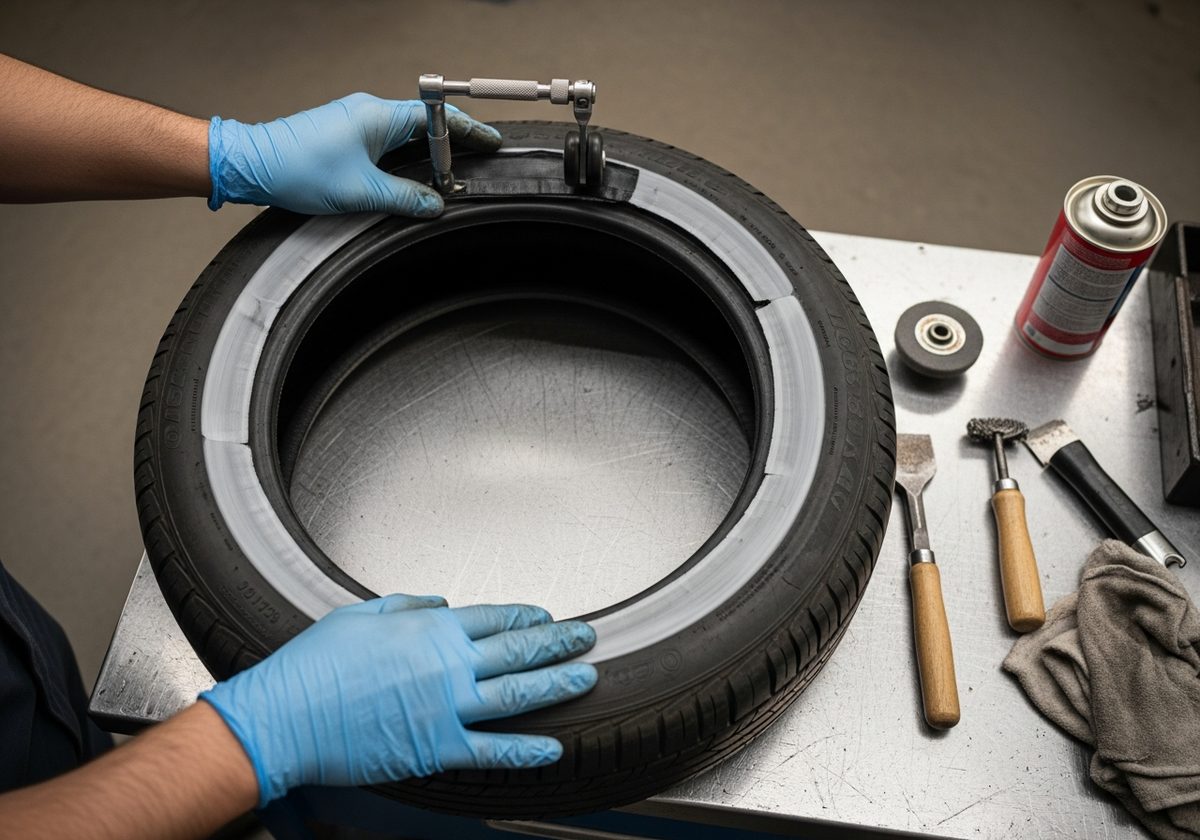
Whether a tire can be repaired comes down to three questions, in this order: where is the damage, how big is it, and what happened to the tire before you found the problem. Get a 'no' on any one of those and the answer is replacement, no matter how small the hole looks or how good the rest of the tire's tread is. Shops that skip this framework and repair anything that holds air are doing you a disservice — a bad repair fails later, usually without warning. Here's the actual decision tree we use on every tire that comes across the lift, including the size cutoff, the driven-on-flat rule, and how many repairs one tire can safely carry.
Why 'is my tire repairable' isn't a yes/no answer over the phone
A lot of drivers try to get an answer by describing the puncture over the phone, and we understand the instinct — nobody wants to drive somewhere just to be told no. The honest answer is that a phone description can rule out an easy no, like a puncture that's obviously on the sidewall, but it can't confirm a yes. The only way to check the size accurately, see the inner liner, and rule out driven-on-flat damage is to get the tire off the car and, ideally, off the rim. That's why we don't quote firm repair-or-replace answers sight unseen — we quote both possibilities and confirm once we've actually looked.
The three questions that decide repairable or not
Location, size, and history — every repairable-or-not call comes down to these three, checked in order. Location asks whether the puncture is in the tread, where a repair can actually hold, or on the shoulder or sidewall, where it can't. Size asks whether the puncture is small enough that the surrounding structure is still intact. History asks whether the tire was driven on while flat, since that can cause damage a visual inspection alone won't catch. A 'yes, repairable' answer requires passing all three, not just one.
Rule 1: Where is the damage — tread, shoulder, or sidewall?
The tread is the flat, wide contact area that touches the road — it's built with layers of steel belt underneath specifically to be repairable, and it's the only zone where a patch-plug combo is rated to hold. The shoulder, where the tread curves into the sidewall, is a gray zone that most shops, us included, treat as non-repairable, since it flexes more than the center of the tread and a repair there is more likely to work loose. The sidewall is never repairable, full stop — it flexes with every rotation of the wheel, has no steel belt reinforcement to support a patch, and a repair there can fail catastrophically at speed rather than just leaking slowly.
Rule 2: How big is the puncture?
Tire-industry repair standards set the cutoff at about 1/4 inch (6mm) in diameter for a puncture in the tread. Below that, the surrounding steel belt structure is generally still intact enough to support a proper patch-plug repair. Above that, too much of the belt material is compromised, and a repair — even a well-executed one — doesn't restore the tire's structural integrity. We measure with a gauge rather than eyeballing it, since a puncture can look small on the surface and open up wider once the plug reamer clears the channel.
Rule 3: Was it driven on while flat?
This is the rule most drivers don't know exists, and it's the one that overrides an otherwise-repairable puncture. A tire driven any real distance at very low or zero pressure flexes far more than it's designed to, and that flexing can damage the inner liner and belt structure in ways that don't show up as a visible flaw. NHTSA and tire-industry repair guidelines are consistent on this: if a tire's been driven flat, treat it as unrepairable regardless of how the actual puncture measures, because the hidden damage from the flat-driving itself is the bigger risk, not the original hole. A short distance at low speed, like limping the last few hundred feet into a parking lot, is generally fine to still evaluate for repair — several miles at any real speed is not.
How many repairs can one tire have?
One. Industry guidance caps it at a single repair per tire, with the second rule being that a new puncture can't be within about an inch and a half of an existing repair, and neither can sit within about an inch of the tire's edge. A tire that already has one prior repair and picks up a second puncture somewhere else on the tread might still be repairable — but a second puncture close to the first one usually isn't, since there's not enough undamaged material between them to support two separate repairs.
Run-flat tires: a different set of rules
Run-flat tires are built to keep supporting the vehicle's weight for a limited distance even after a puncture, which sounds like it would make them more forgiving to repair — it's actually the opposite. Once a run-flat has been driven in run-flat mode, even briefly, most manufacturers recommend against repairing it at all, because the internal structure that let it support the car without air has likely already been stressed beyond what a standard repair addresses. If you're driving on run-flats and go flat, treat replacement as the default expectation rather than the exception.
Does a tire's age or tread depth affect whether it's worth repairing?
Location, size, and history determine whether a repair is safe. Tread depth determines whether it's worth doing. A tire at 3/32" of remaining tread, close to Pennsylvania's 2/32" inspection cutoff, might pass every repairability rule and still not be worth patching, since you're paying for a repair on a tire that needs replacing again within months anyway. Our tread depth guide has the full penny-and-quarter test if you want to check your remaining tread before deciding.
Repairable vs. not: a quick reference
- Tread puncture, under 1/4 inch, no prior nearby repair, never driven flat: repairable.
- Shoulder puncture: usually not repairable — shop's call after inspection.
- Any sidewall damage, bubble, or cut: never repairable, regardless of size.
- Puncture over 1/4 inch, even in the tread: not repairable.
- Driven more than a short distance while flat: not repairable, regardless of puncture size.
- Second puncture within about 1.5 inches of an existing repair: usually not repairable.
The quick self-check before you drive to a shop
- Find the puncture and note where it is — center of the tread, near the shoulder, or on the sidewall.
- Look for a visible bulge or soft spot on the sidewall, separate from the puncture itself — that's a sign of internal damage even without a hole there.
- Think back on whether you kept driving after the tire went soft, and roughly how far.
- Check whether the tire already has a visible plug or patch mark from an earlier repair.
- If you're not sure on any of these, don't guess — a shop inspection with the tire off the rim is the only way to know for certain.
What we check when you bring it in
We dismount the tire, inspect the inner liner under good light, measure the puncture, and check for any secondary damage near it before we call anything repairable or not. You get a photo of what we found either way — the actual puncture, not just a verbal 'sorry, it's not repairable.' If it passes all three rules, we do the patch-plug combo the same visit. If it doesn't, we quote replacement options, including a matched used tire if the rest of your set still has good tread.
Why we always show you the puncture, not just tell you the verdict
Every repairable-or-not call we make comes with a photo of the actual damage — the puncture, the location relative to the shoulder, and the measurement if it's borderline on size. That's partly about trust, but it's also useful information if you're comparing our call against a second opinion somewhere else: the same photo and measurement should get you the same answer at any shop actually following industry repair standards, since these aren't judgment calls, they're specifications.
When repair looks possible but we'd still recommend replacement
Occasionally a tire technically clears all three rules and we still steer a customer toward replacement — usually because the tread is already close to the 2/32" legal minimum, because there's uneven wear nearby suggesting an alignment problem that's going to keep damaging whatever tire is mounted there, or because the tire is old enough that the rubber itself is showing dry-rot cracking unrelated to the puncture. We'll always tell you why, with the tire in front of you, rather than just saying no.
Bring it in and we'll give you a straight answer — patch, plug-patch, or replace — based on what we actually find, not a guess over the phone. If it's not repairable, we'll walk you through new and used tire options in your size before you decide. Call (724) 679-7829 or stop by 400 Railroad Street, Bldg 1 Garage 4. Open 7 AM to 9 PM, seven days a week.
FAQ
- Can a sidewall puncture be repaired?
- No. Sidewall damage of any kind, including small cuts, bubbles, and abrasions that expose the cord, is never repairable regardless of size. The sidewall flexes constantly and has no steel belt structure to support a patch, so a repair there can fail without warning at speed.
- What's the maximum size puncture that can be repaired?
- About 1/4 inch (6mm) in diameter, per tire-industry repair standards, and only if it's located in the tread rather than the shoulder or sidewall. Above that size, too much of the underlying steel belt structure is compromised for a repair to restore the tire's integrity.
- Can you repair a tire that was driven on flat?
- Generally no. A tire driven any real distance at low or zero pressure can suffer inner liner and belt damage that doesn't show up as a visible flaw, so tire-industry guidance treats a driven-on-flat tire as unrepairable regardless of how the original puncture measures.
- How many times can one tire be repaired?
- Once, per standard industry guidance. A second puncture elsewhere on the tread might still be repairable, but a new puncture within about 1.5 inches of an existing repair, or within about an inch of the tire's edge, usually isn't.
- Is a tire repairable if it's already been patched once?
- It depends on where the new damage is relative to the old repair. Far enough away on the tread, it can often still be repaired. Too close to the existing patch, there's not enough undamaged material to support a second repair safely.
- Does a tire's age affect whether it's repairable?
- Age and tread depth don't change whether a repair is technically safe, but they can change whether it's worth doing. A tire close to Pennsylvania's 2/32-inch inspection minimum may pass every repairability rule and still not be a good investment since it needs replacing again soon regardless.
- Can I tell myself if my tire is repairable before going to a shop?
- You can rule out an easy no — sidewall damage is visible without special tools. Confirming a yes requires measuring the puncture accurately and inspecting the inner liner, which means the tire needs to come off the rim. That's why we quote both possibilities and confirm once we've actually looked.
Bring it to us. We'll tell you straight.
Photo-first quotes. Real prices. Open 7 days, 7am–9pm.