
Used vs. New Tires in Pittsburgh: Which Actually Makes Sense?
Cost-per-mile comparison of used and new tires for Pittsburgh drivers — when the used math wins, when new wins, and how to decide for your specific car.
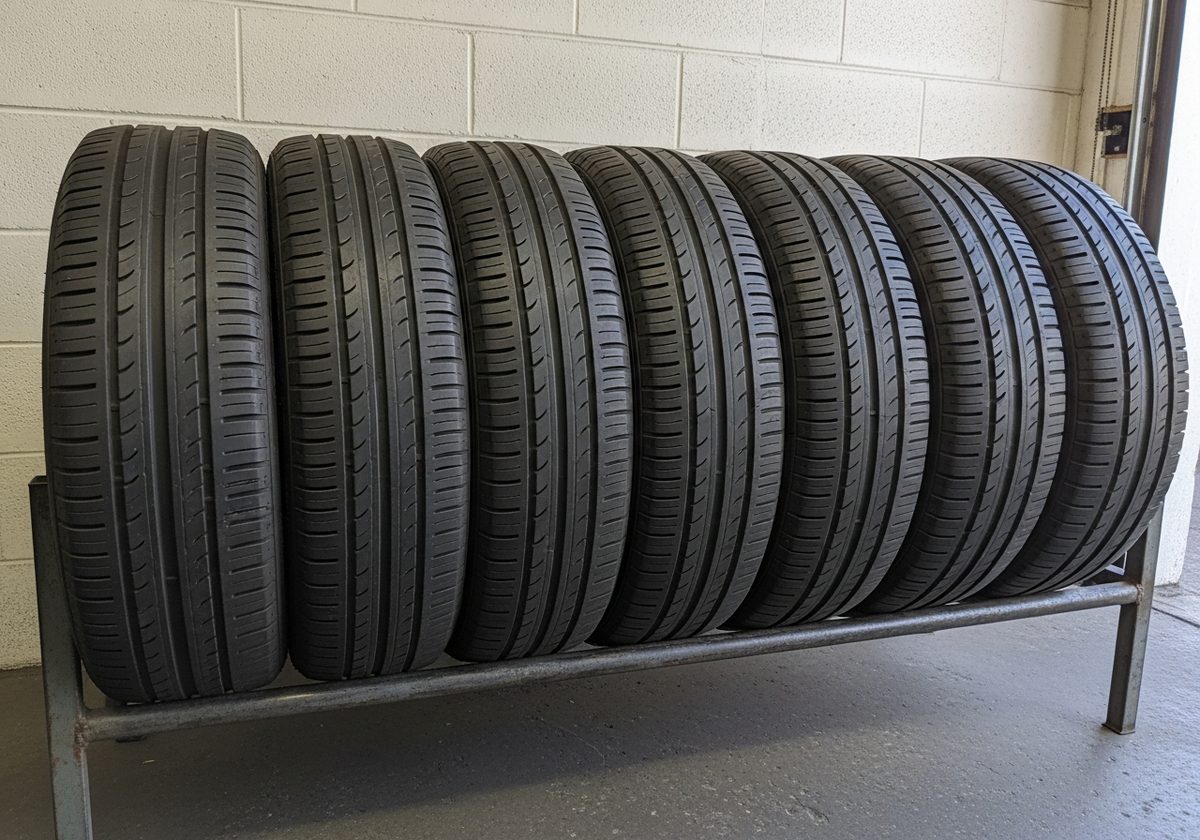
Used tires usually win on cost per mile for short ownership windows, tight budgets, and single-tire replacements. New tires usually win for long-term ownership, all-wheel-drive vehicles that need a matched set, and drivers who want the longest possible stretch between tire shopping trips. Sticker price alone answers the wrong question — a $60 used tire and a $180 new tire aren't actually comparable numbers until you divide each by how many miles it'll actually give you. Here's that math worked out for Pittsburgh driving conditions specifically, plus the situations where the 'obvious' cheaper choice on the price tag isn't actually the cheaper choice once you look at cost per mile.
The real comparison isn't sticker price — it's cost per mile
A tire's real cost is its price divided by the miles it delivers, not the number on the invoice. A $200 tire that lasts 60,000 miles costs about 0.33 cents per mile. A $70 used tire that delivers 10,000 remaining miles costs 0.7 cents per mile — more than double, despite the much lower sticker price. That doesn't mean used tires are a bad deal; it means the comparison only works once you know the remaining tread and do the division, which is exactly what we'll walk through with you before you buy either option.
New tire cost per mile
Our new tire cost guide breaks Pittsburgh pricing into three tiers: budget tires run $400-600 for a set of four and realistically deliver 30,000 to 40,000 miles here, working out to roughly 1 to 1.3 cents per tire-mile. Mid-range tires run $600-1,000 for a set and deliver 45,000 to 60,000 miles, closer to 0.9 to 1.1 cents per tire-mile. Premium tires run $1,000-1,600-plus and can stretch to 60,000-75,000-plus miles, often landing in a similar or slightly better cents-per-mile range than budget despite the much higher upfront cost — which is the case for spending more up front that we make in that guide.
Used tire cost per mile
Used tires typically sell for well under half the price of a comparable new tire, and at 2,000 to 3,000 miles per remaining 32nd of tread, a tire at 6/32" against our 4/32" floor gives you roughly 4,000 to 6,000 miles of use. Do the division on a typical used-tire price against that mileage and you'll often land in a similar or slightly higher cents-per-mile range than a mid-range new tire — the win with used tires isn't usually a lower cost per mile, it's a much lower total cash outlay for less commitment, which matters when the total dollars, not the rate, is the constraint. Our used tire lifespan guide covers the full mileage math.
Worked comparison: a full set for a $2,000 car vs. a $30,000 car
On a car worth roughly what a set of new tires costs, spending $600 on mid-range new tires can be a hard sell even if the cost per mile is reasonable — the total dollar commitment is out of proportion to the vehicle. A set of used tires at a few hundred dollars total, even at a higher cost per mile, keeps the tire spend proportional to the car's value and gets you safely through however long you plan to keep driving it. On a $30,000 vehicle you intend to keep for years, that same math flips: the total dollar difference between used and new is small relative to the car's value, and the longer remaining life, full warranty, and even wear of a new set are worth the difference. Most Pittsburgh drivers fall somewhere between those two extremes — a car worth $8,000 to $15,000 that you plan to keep for a couple more years — and that's exactly the range where it's worth doing the actual math with us rather than defaulting to whichever option feels intuitively right.
When new wins
- You're keeping the car for years and want the longest stretch before the next tire conversation.
- You're replacing all four and want a full manufacturer tread-life warranty.
- Your vehicle is all-wheel-drive, where even, matched tread across all four tires protects the drivetrain.
- You drive high annual mileage, where the lower cents-per-mile of a mid-range or premium tire adds up in your favor.
- You want the option to choose the tire model for your specific priorities — quiet ride, snow traction, or towing capacity.
When used wins
- You're planning to sell or trade the car within a year or two.
- You're matching a single tire or a pair to an existing set with good remaining tread.
- Budget is the binding constraint right now, not cost per mile over time.
- It's a second vehicle or a teen driver's first car that doesn't see daily mileage.
- You need a specific size or spec today and a used option is in stock while a new order would take days.
The safety question isn't actually different between the two
It's tempting to frame this as 'safe new tires' versus 'risky used tires,' but that's not the real distinction. A properly inspected used tire, checked for tread depth, sidewall condition, and repair history, is just as safe to drive as a new tire of comparable remaining life — see our used tire safety guide for exactly what that inspection covers. That's also why we hold every used tire to the same 4/32" floor described in that guide, well above Pennsylvania's 2/32" legal minimum. The actual risk isn't the word 'used,' it's an unverified tire, new or used, that nobody checked properly before it went on the car. Buy from a shop that inspects and stands behind what it sells, and the used-versus-new decision becomes purely a budget and timeline question.
What Pittsburgh-specific factors tilt the decision
A few local realities matter more here than in a flatter, drier market. Potholes and hills accelerate wear regardless of whether the tire started new or used, which shortens the payback window on a premium new set slightly compared to a flat-city driver. Salt-belt winters age sidewalls through dry rot on a separate clock from tread wear, which matters more for used tires since their age is often less certain than a tire you bought new yourself. And PA's annual inspection means any tire, used or new, has to clear the 2/32" tread cutoff every single year, so buying too close to that line, new or used, just means an earlier repeat trip regardless of the price you paid.
Does buying used tires void any new-vehicle warranty?
No — routine tire replacement, used or new, doesn't affect a vehicle's manufacturer warranty on the rest of the car. The only warranty consideration is on the tire itself: a new tire carries the manufacturer's full tread-life and workmanship warranty, while a used tire carries whatever's left of that original warranty, rarely transferable in practice, plus our own 30-day road-hazard guarantee on top.
What about resale value?
A car with a fresh set of matched new tires can be a small selling point when you list it, but it's rarely worth buying a full new set purely for resale unless your current tires are genuinely near the end of their life anyway. If you're selling within the next few months and your tires still have reasonable tread, that money is usually better spent elsewhere; if they're already close to worn out, even a modest used set in good condition removes 'needs tires soon' from a buyer's checklist without the full new-tire spend.
How financing changes the comparison
New tires purchased through financing options like Synchrony Car Care, Affirm, or Snap Finance spread the cost over time, which can make the higher upfront price of new tires more comparable to paying cash for used ones month to month. If cash flow today is the actual constraint rather than total cost, ask about financing before defaulting to used tires purely on price — it can open up the better cost-per-mile option without the full lump sum up front.
Mixing strategies: new now, used later, or vice versa
Plenty of customers do both across a car's life rather than picking one strategy forever. Buy new when the budget allows and you're keeping the car, then match with a used tire later if a single tire fails early from a pothole or nail rather than replacing a set that still has three good tires on it. Or start with a used set to get through a tight financial stretch, then upgrade to new once the timing's better. We'll always tell you honestly which option fits the specific situation you're in today, not just what's in stock.
The bottom line
If you're keeping the car for years, want a full warranty, or you're on an all-wheel-drive vehicle, lean new. If you're on a tight budget, matching a single tire to an existing set, or driving a car you won't own much longer, lean used, from a shop that actually inspects what it sells. Either way, ask for the real numbers — price and remaining or rated mileage — before deciding, and don't let sticker price alone make the call.
Tell us your size, your budget, and how long you're planning to keep the car, and we'll lay out both options — real prices, real remaining mileage — before you decide. Call (724) 679-7829 or stop by 400 Railroad Street, Bldg 1 Garage 4. Open 7 AM to 9 PM, seven days a week.
FAQ
- Is it better to buy used or new tires?
- It depends on how long you're keeping the car and what's driving the decision. Used tires win on total cash outlay for short ownership or a tight budget. New tires win on cost per mile over the long run, warranty coverage, and matched wear on all-wheel-drive vehicles.
- What's the cost-per-mile difference between used and new tires?
- A mid-range new tire often runs close to 1 cent per mile over its full rated life. A used tire's cost per mile depends heavily on its remaining tread depth and price — sometimes lower, sometimes similar to new, which is why we do the actual math with you rather than assuming used is always cheaper per mile.
- Can I mix used and new tires on the same car?
- Yes, as long as tread depth stays reasonably matched across the axle or the full set, especially on all-wheel-drive vehicles where mismatched rolling diameters strain the drivetrain. We check your existing tires before recommending a used match.
- Do used tires come with a warranty like new tires?
- Every used tire we sell carries a 30-day road-hazard guarantee. New tires carry the manufacturer's full tread-life and workmanship warranty, which is typically longer and broader in coverage than what a used tire can offer.
- Which is better for resale value, used or new tires?
- A full set of new tires can be a minor selling point, but it's rarely worth the expense purely for resale unless your current tires are already near the end of their life. A used set in good condition can still clear 'needs tires soon' off a buyer's list at a fraction of the cost.
- Is buying used tires actually cheaper in the long run?
- Sometimes, but not automatically. Used tires are almost always cheaper upfront and in total cash spent, but their cost per mile can be similar to or even higher than a new mid-range tire once you account for the shorter remaining life. It comes down to your specific situation, not a blanket rule.
- Should I buy new tires for a car I'm about to sell?
- Usually not, unless your current tires are already close to Pennsylvania's 2/32-inch inspection minimum. If they're that worn, even a modest used set is often the better financial move than a full new set you won't get much benefit from before selling.
Bring it to us. We'll tell you straight.
Photo-first quotes. Real prices. Open 7 days, 7am–9pm.