Are Used Tires Safe? The Honest Answer
Used tires are safe when they're properly inspected. PTS's 4/32-inch internal floor vs. PA's 2/32-inch inspection cutoff, and exactly how we check every tire.
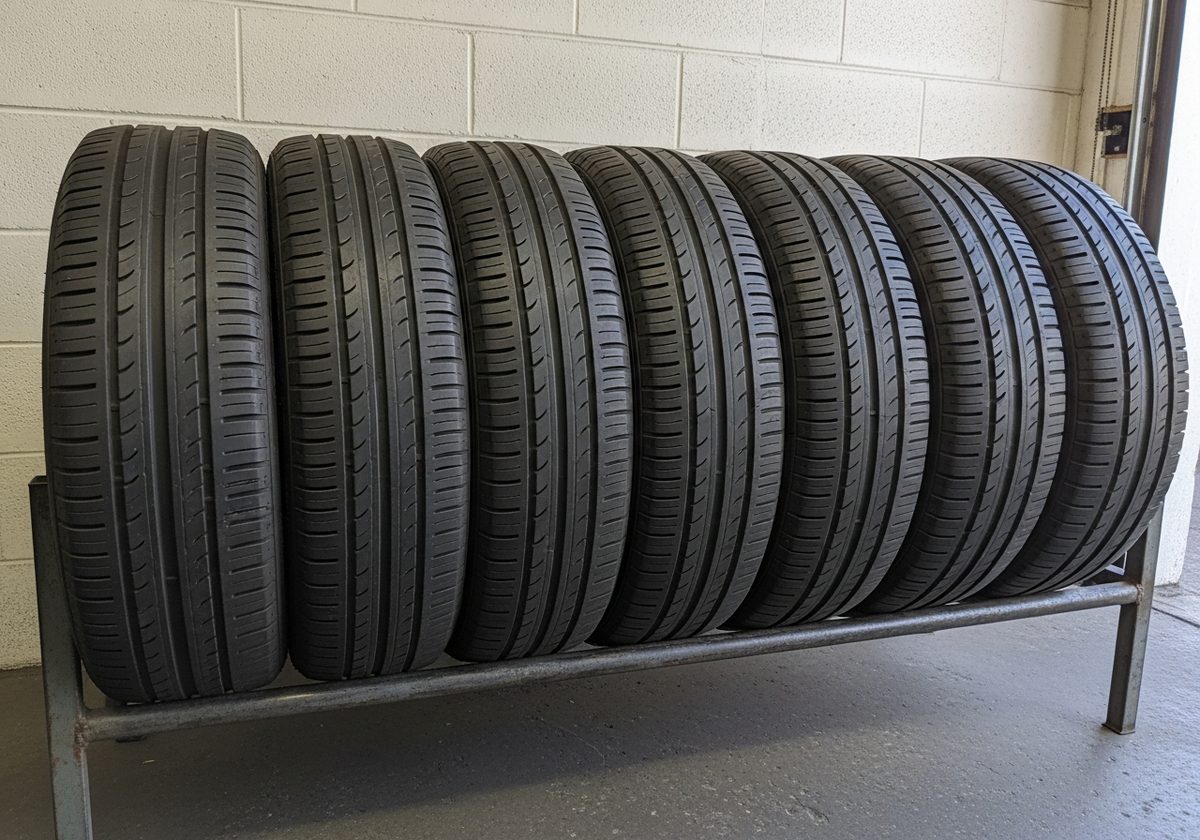
Yes, used tires are safe — when they're properly inspected before they go on your car. That inspection is the entire job, not an afterthought, and it's also exactly where the used-tire market's bad reputation comes from: a shop that wipes down a tire and slaps it on without checking tread, sidewall condition, or repair history is selling you a gamble, not a tire. We set our own internal floor at 4/32" of tread, double Pennsylvania's 2/32" state inspection cutoff, and every used tire we sell gets checked for sidewall damage, bead condition, and prior repairs before it's offered for sale. Here's exactly what that inspection covers and why the bar we hold ourselves to is higher than the legal minimum.
Why 'used' doesn't mean 'worn out'
A lot of the used tires that come through our shop aren't worn — they're just off someone else's car. Lease returns, trade-ins, and vehicles that got a wheel-size upgrade all generate tires with plenty of tread left and no story behind them beyond normal driving. That's different from a tire that's been run down to the cords, and it's why 'used' and 'high-mileage' aren't the same category, even though people use the words interchangeably. Every tire still goes through the same inspection regardless of how it got to us.
Where our used tires actually come from
Most of our used-tire inventory comes from trade-ins on new-tire sales, vehicles we're servicing that are getting a tire size change, and local wholesalers who deal specifically in takeoffs — tires pulled off vehicles for reasons that have nothing to do with tire condition. We don't buy blind pallets of unknown-origin tires, and we don't sell anything we haven't personally measured and inspected ourselves, regardless of where it came from.
The four things we check on every used tire before it goes on your car
Before anything gets offered for sale, four checks happen:
- Tread depth, measured in 32nds at multiple points — we set our own floor at 4/32", not the legal 2/32" minimum.
- Sidewall condition — checked for bubbles, cuts, abrasion, and the fine surface cracking that signals dry rot.
- Bead and rim-seal condition — a damaged bead won't hold air reliably even on a tire with good tread.
- Repair history — we don't sell tires with a plug-only repair, or any repair that isn't a proper patch-plug combo in a safe location.
PTS's 4/32" floor vs. Pennsylvania's 2/32" legal minimum
Pennsylvania's inspection manual sets 2/32" as the hard cutoff for passing a state inspection, but at exactly 2/32" a tire is legally bald with almost no meaningful wet-weather grip left. Tire Rack and most manufacturers point to 4/32" as the practical replace-earlier line, since hydroplaning risk climbs fast on wet pavement below that depth. Starting a used tire at 4/32" or better means you're getting real usable life, not a tire that's going to fail your next inspection in a few months. Our tread depth guide covers the penny and quarter test if you want to check any tire yourself, new, used, or already on your car.
What makes a used tire unsafe
A handful of specific things disqualify a used tire regardless of how much tread is left: a sidewall bubble or bulge, visible cord exposure anywhere, fine cracking around the bead or in the sidewall grooves that signals dry rot, and any sign the tire was driven while significantly underinflated or flat, since that kind of stress can damage the internal structure without leaving an obvious external mark. A tire can look almost new and still fail one of these checks — which is exactly why tread depth alone was never a good enough standard on its own.
The industry's bad reputation — and why it's earned in some places
If you've heard someone say used tires are a bad idea, they're not entirely wrong about the market — some sellers do exactly what the reputation describes: minimal or no inspection, tires sold purely on the fact that they hold air in the moment. That's a real risk, and it's the reason we treat inspection as the actual product, not a formality before the sale. A used tire that's been properly checked is a different thing entirely from one that hasn't, even if they look identical sitting side by side on a shelf.
Speed rating and load index: the used-tire detail people skip
Tread and sidewall condition get all the attention, but a used tire also has to match your vehicle's speed rating and load index, not just its size. A tire that's the right diameter and width but rated for a lighter vehicle or lower top speed than your car calls for isn't a safe substitute even if it passes every other check. We match used tires to your specific vehicle's spec, not just the size printed on your old tire's sidewall.
Mixing used tires with your existing set
If you're replacing one or two tires rather than all four, tread depth matching matters. Installing a used tire with noticeably more tread than the other three can affect handling, especially on all-wheel-drive vehicles where mismatched rolling diameters put extra strain on the drivetrain. We check your remaining tires' tread depth before recommending a used replacement and will tell you if a matched used tire isn't a good fit for your specific setup.
Our 30-day road-hazard guarantee
Every used tire we sell carries a 30-day road-hazard guarantee. Clip a pothole on the Parkway or pick up a nail in the first month and the tire's damaged beyond repair, you're covered. It's on top of the hand inspection every tire gets before it's ever offered for sale — the guarantee exists because we're confident in the inspection, not instead of it.
What happens after the inspection — mounting and balancing
A used tire that passes inspection gets mounted and balanced the same as a new one, with a new valve stem and proper torque on the lug nuts. Same-day service on sizes we have in stock, and we're open seven days a week if a used tire is what gets you back on the road today rather than waiting on a special order.
Is it worth buying used tires for a car you're keeping long-term?
For a car you plan to keep for years, new tires usually make more sense in the long run — you get full tread life and typically a longer manufacturer tread-life warranty. Used tires shine for shorter ownership windows: a car you expect to sell within a year or two, a teen driver's first car, or a second vehicle that doesn't see daily miles. Tell us honestly how long you plan to keep the car and we'll steer you toward whichever option actually saves you money over that timeframe, not just at checkout. Our used vs. new tires comparison breaks down the cost-per-mile math in detail.
How to check a used tire yourself if you're buying elsewhere
Look for the DOT date code stamped on the sidewall — a four-digit number where the first two digits are the week of manufacture and the last two are the year, so '2324' means the 23rd week of 2024. Most tire makers and safety organizations recommend against tires older than about 6 to 10 years regardless of tread, since rubber degrades with age even sitting still. Beyond the date, run your hand around the full sidewall feeling for fine cracks, check the tread depth at three points with a gauge or the penny test, and ask directly whether the tire has any repair history. If a seller can't or won't answer that last question, that's your answer.
Who used tires aren't the right call for
Used tires aren't the right fit for every situation, and we'll tell you when that's the case rather than pushing them because they're in stock. High-mileage highway commuters who want the longest possible tread life ahead of them are usually better served by a new mid-range set with a full manufacturer warranty. Performance and luxury vehicles that call for a specific tire spec can be hard to match reliably in the used market. And if you're chasing the quietest, smoothest ride possible, a used tire — even a good one — has already lost some of the fresh-tread comfort a new tire starts with. None of that makes used tires unsafe; it just means they're the right tool for some jobs and not others.
The bottom line on used-tire safety
A used tire is exactly as safe as the inspection behind it — nothing more, nothing less. Ours get measured, checked for hidden damage, verified against your vehicle's spec, and backed by a 30-day guarantee before they're ever offered for sale. If a shop can't tell you the tread depth, the repair history, and the DOT date code on a used tire they're selling you, that's a shop that skipped the part of the job that actually matters.
Tell us your size and we'll show you what's in stock, tread rating and all, before you pay anything. Call (724) 679-7829 or stop by 400 Railroad Street, Bldg 1 Garage 4 — open 7 AM to 9 PM, seven days a week.
FAQ
- Are used tires actually safe to drive on?
- Yes, when they've been properly inspected. Ours are checked for tread depth (4/32-inch minimum), sidewall condition, bead integrity, and repair history before they're ever offered for sale, and every sale includes a 30-day road-hazard guarantee.
- What's the minimum tread depth for a safe used tire?
- We set our own floor at 4/32 of an inch, double Pennsylvania's 2/32-inch state inspection cutoff. At 2/32 a tire is legally bald with little wet-weather grip left, so starting higher means real usable life, not a tire that fails inspection again in a few months.
- How can I tell if a used tire has hidden damage?
- Look for sidewall bubbles or bulges, fine cracking near the bead (a sign of dry rot), and ask about repair history — a plug-only repair or a repair too close to a previous one is a red flag. A full inspection with the tire off the rim is the only way to be fully certain.
- Do used tires expire?
- Tire rubber degrades with age even without much mileage on it. Most manufacturers and safety organizations recommend against tires older than roughly 6 to 10 years regardless of tread depth. Check the DOT date code on the sidewall to see when a specific tire was made.
- What's the DOT date code and why does it matter for used tires?
- It's a four-digit code stamped on the sidewall — the first two digits are the week of manufacture, the last two are the year. A tire with plenty of tread but a decade-old date code is a different risk profile than a low-mileage tire from last year, which is why we check it on every used tire.
- Does Pittsburgh Tire Shop guarantee used tires?
- Yes. Every used tire we sell carries a 30-day road-hazard guarantee, on top of the hand inspection every tire goes through before it's offered for sale.
- Are used tires legal to sell and install in Pennsylvania?
- Yes, as long as they meet the same PA inspection standards as any tire on the road, including the 2/32-inch minimum tread depth and no exposed cord or sidewall damage. We hold our own inventory to a higher 4/32-inch floor before it's ever offered for sale.
Bring it to us. We'll tell you straight.
Photo-first quotes. Real prices. Open 7 days, 7am–9pm.